Brielle Archellus, a sixth-grade honor roll student from Liberty City, Florida faced classroom bullying. Her parents encouraged her to share her experience in an interview to encourage others to stand against bullying. Archellus was determined to tell her side of the story and give advice to other school-aged children.
During the interview, a quiet, shy, and beautiful melanin-skinned young girl entered the building and nervously shuffled her feet under the table while adjusting her microphone. Then, in a soft-spoken voice, she said, “Hi, my name is Brielle Archellus, and today we are going to talk about bullying.” Archellus, while describing the bullying incident, nervously expressing how it was making her feel, brought her anti-bullying message to life.
“I just don’t understand why they want to bully someone; I just want to go to school and get good grades so that my mom and dad will be proud of me,” said Archellus.
“Sometimes people have problems at home that they don’t want to talk about. My mom, dad and brothers love me. They show me that they care. Sometimes kids don’t have that, so they get mad at you because you are happy. I’m not going to let them make me mad all the time, but I’m not going to let anybody just keep hitting me,” said Archellus.
The bullying incident that Brielle experienced is a prime example of why a self-defense K-12 Curriculum to combat bullying is vital in the local school district.
Self-defense classes, such as martial arts or karate, are usually offered by private companies or provided through an advocate diversion program after a person becomes a victim of bullying or the aggressor.
However, fees and costs associated with participation or certification of the classes mentioned above may pose a problem for minorities residing in low socio-economic areas in urban school districts, like Miami-Dade County Public Schools (M-DCPS). They have limited incomes or are receiving public assistance on a fixed income.
M-DCPS is the largest school district in Florida, and the third largest district in the nation. A diverse population of minorities, from low-income to middle income, with more than 35,000 employees, 340,000 K-12 students, inclusive of Title I Schools; whereas Title I provides federal funding to support effective, evidence-based educational strategies that close the achievement gap and enable the students to meet the state’s challenging academic standards. (M-DCPS Statistical Highlights 2019-2021).
The current Florida Statute 1006.147, adopted due to a bullying suicide, became law, known as Jeffrey Johnston Stand Up for All Students Act requires school districts in Florida to adopt an official policy prohibiting bullying and harassment of students.
“Providing evidence-based instruction that promotes preventive self-defense while incorporating character building, conflict resolution, and social-emotional skills, will decrease the number of victims affected by bullying and deter bullying in K-12 educational settings in Florida.” (Gage, Lee, et, al 2019) explained that utilizing the School Wide Positive Behavior Interventions and Supports program solely may not have a long-term effect, but by integrating evidence-based bullying prevention and intervention programs has the probability of producing positive outcomes with anti-bullying and behavioral bullying.
In an interview with Jamari Bell, featured in the “Stop Bullying” PSA, Bell shared his perspective and personal experience regarding a recent bullying incident. “I didn’t do anything to him. I am new to the school, and he thought that he could push me around. The first time it happened to me, I didn’t tell the teacher or my mom. He was bigger than me, but I wasn’t afraid to tell the teacher. I just wanted to handle it myself, so he would not bother me anymore,” said Bell.
“Bullying is not right, because they could hurt people’s feelings. It’s not nice to bully. Being a bully is not good because it can make people commit suicide. I think schools should have classes for people who get bullied and people who bully people so they could learn how to stop bullying,” said Bell.
“When people bully other people, sometimes that makes them commit suicide, and I don’t think that they should bully people,” said Bell.
Jamari’s mother, Mahoghaney Bell, expressed her concern about the way the principal handled the incident. “The principal called the school police on my son, and he was the victim. They need to do better with children that are victims of bullying,” said Bell.
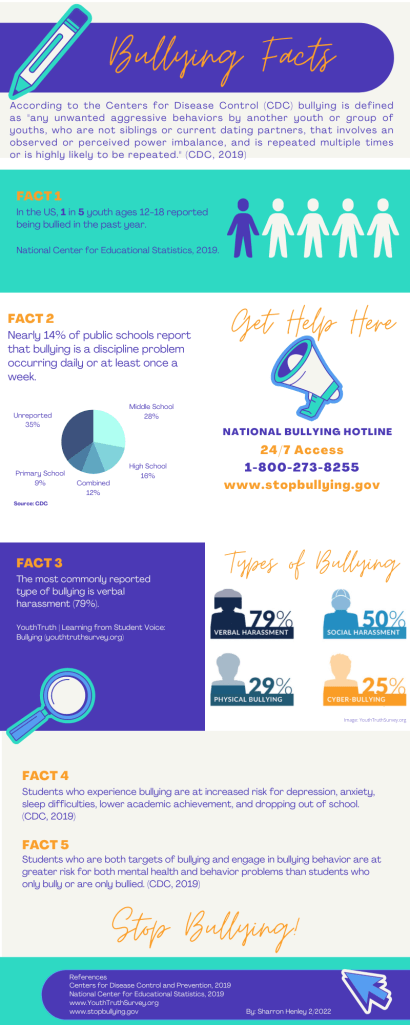
According to the CDC (2019), “1 in 5 youth ages 12-18 reported being bullied in the past year”. Victims of bullying may endure name calling, threats, and intimidation over an extended period, while many incidents go unreported out of fear or embarrassment.
Information provided by the CDC in the research pamphlet The Relationship Between Bullying and Suicide: What We Know and What it Means for Schools developed in 2014 to respond to problems of bullying and suicide-related behavior concluded the following:
“The bottom-line of the most current research findings is that being involved in bullying in any way—as a person who bullies, a person who is bullied, or a person who both bullies and is bullied (bully-victim)—is ONE of several important risk factors that appears to increase the risk of suicide among youth.”
According to the CDC (2019), “Students who experience bullying are at an increased risk for depression, anxiety, sleep difficulties, lower academic achievement, and dropping out of school.
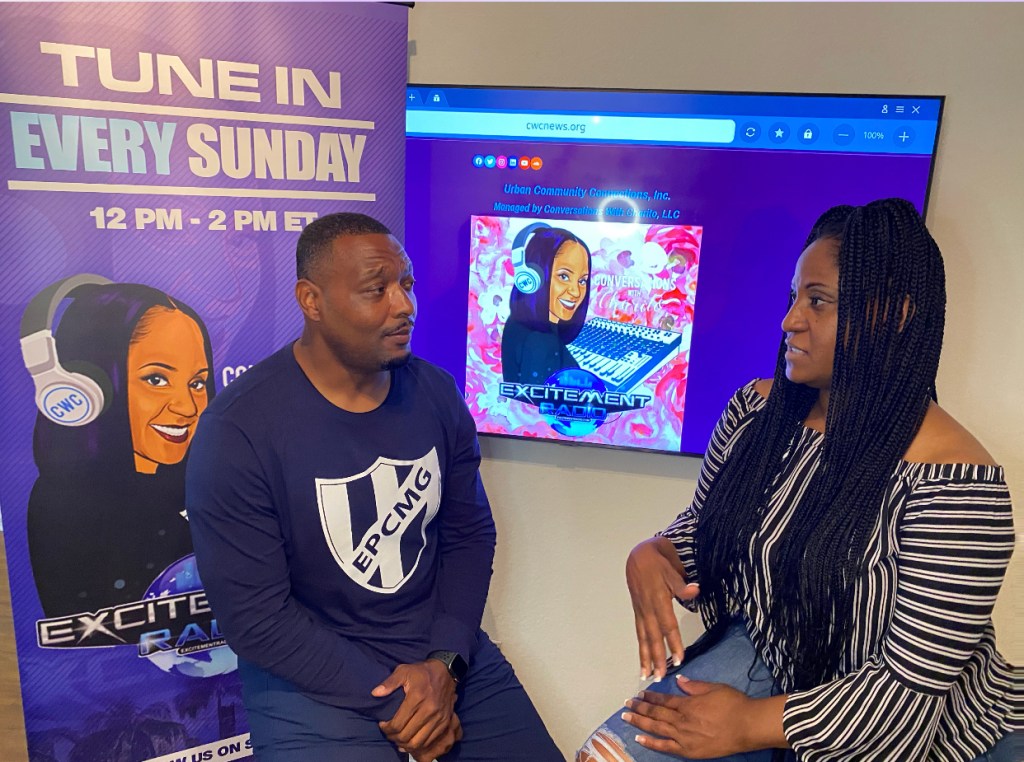
In an interview with Anthony Harris, Dean of Students, known for his raspy voice, at Excelsior Charter Prep Academy, of Miami-Dade County Public Schools, also known as Coach Harris, proudly discussing his anniversary of serving as a disciplinarian, mentor and coach to impressionable youth in urban areas of South Florida, showing considerable concern regarding the notifications of recent threats, and possible weapons on several campuses across the local school district.
“In the past 17 years I’ve served over 12,000 students, many whom were either victims or aggressors of bullying. However, most students, whether they’re victims or aggressors, don’t realize they’re bullying someone, on and off social media. This is behavior is not tolerated in the school district or at my school sites,” said Harris.
As a former athlete, Harris reluctantly recalls using bullying tactics, a common practice during his adolescent years, to members of the opposing team in high school. Harris recalls seeing the effects of bullying in his hometown community of Ft. Myers, Florida.
Overwhelming outcomes and experiences of becoming a college student, adjusting to changing behaviors as a professional athlete, transitioning to an NFL player, became a life changing decision for Harris to improve and expand his community involvement efforts to save troubled youth in urban school districts, experiencing bullying.
During the interview, Harris stated that, “Students should be able to come to school without worrying about bullying, gangs or illegal drugs on campus.”
“Students oftentimes become used to the behaviors of bullying, as victims, they become reluctant to report the incidents for fear of retaliation, but we have a zero tolerance for bullying, threats of school violence, or any other at-risk behaviors at our schools,” said Harris.
“Serving as a Dean of Students comes with an array of responsibilities, but first and foremost it is my responsibility to create a safe environment where the teachers can teach without distractions and the students can learn without distractions. I am only one individual, I believe that a curriculum focused on bullying prevention, delivered as a required course during school hours, would be beneficial, since after-school programs concentrate on sports, intervention should occur before they get on the field, just like the NFL,” said Harris.
In an interview, Lynda Roberts North Miami Beach Police Department Athletic League (PAL) and Florida State-Wide PAL Coordinator, discussed the importance of providing enrichment and prevention activities for youth ages 13-18.
“Offering a safe environment and cultural enrichment activities provides a diversion for bullying. When youth are engaged in meaningful and stimulating activities, they don’t have time for bullying. To show the seriousness of bullying in schools, it is worth putting some statistics into perspective,” said Roberts.
According to the U.S. Department of Justice, Bureau of Justice Statistics, School Crime Supplement (SCS) to the National Crime Victimization Survey (2019) “In 2019, about 22 percent of students ages 12–18 reported being bullied at school during the school year, which was lower than the percentage reported in 2009 (28 percent). In 2019, about 16 percent of students in grades 9–12 reported being electronically bullied during the previous 12 months.”
“Our job is to protect and serve as law enforcement officials, but we also have to consider the fact that some bullying incidents end in school shootings and homicides. We have to ensure that the youth served in our programs receive bullying prevention education to prevent incidents from occurring in our schools,” said Roberts.
“An innocent life lost to senseless gun violence is never acceptable to any family member. No one ever reaches a level of understanding, they only seek closure and someone to be convicted or take responsibility in the loss of their loved one, especially if it was caused by bullying, which can be prevented,” said Roberts.
“Youth enrolled in our Police Athletic Leagues across the state of Florida have a better opportunity in becoming productive citizens in our communities through prevention efforts and programs, designed to deter youth from at-risk behaviors,” said Roberts.
Roberts continued by saying, “PAL programs across the state of Florida continue to work tirelessly, and collaboratively with local school districts, social service organizations, and law enforcement groups, to deter at-risk youth behaviors. We have more work to do, if we plan on eradicating the effects of bullying on youth and their future.”
In an interview with Garry Graham owner of Graham Counseling & Consulting, LLC from New York, a licensed mental health counselor and therapist, he discussed counseling services for a few adults who were victims of bullying.
“About 35% of the adults that I work with were bullied in their childhood, the remaining percentages possibly never admitted their experience, due to embarrassment. Those who have been bullied experience depression, or even feeling inadequate, or less of a person,” said Graham.
According to Sandee LaMotte of CNN adults serving as bullies, are the likely victims of childhood bullying, troubling childhood experiences, and adolescent bullying.
Based on a study in the Journal of Child and Family Studies by Ellen DeLara of Syracuse University, the need for expanded research by health care providers, supporting the impact of childhood bullying, and the effects of behaviors lasting into adult life is essential.
“A lot of people like to think that you have to put anti-bullying information in a K-12 curriculum. That’s the easy part. The identifying and most important marker for me is to identify the bully,” said Graham.
For more information on suicide prevention, call the National Suicide Prevention Lifeline at 1-800-273-8255 (TALK) or visit http://www.stopbullying.gov
Click on the link below to view or download a copy of “Should Miami-Dade County Public Schools include self-defense instruction for K-12 Curriculum to Combat Bullying?” by Sharron L. Henley (2022)
 CWC News